
As of 8/18/02, this web site (as well as a half dozen other sites that I host) is being served to the outside world by a brand new web server. I call it v3.0 because it's the third server I've built for hosting my web sites. "Version 3" still doesn't have the processing power of the first web server (that had dual Xeon 450's), but in other ways it's far superior. Perhaps the best thing about v3.0 is the scalability it has. In it's current form, the newest web server has plenty of room on it's drives for more web sites and plenty of processing power and RAM to handle much more load than it currently does. If needed, the hardware can be upgraded easily without requiring a completely new server to be built. We'll take a look inside, but first a little history.
There's no question, the previous web server did it's job 24 hours a day, 7 days a week. You can read more about "version 2" in a previous article. Unfortunately it's limited upgradeability made it necessary to build a complete replacement. I needed something that would perform some new duties I required. Building a complete replacement would also minimize the downtime of the web sites as the changeover was performed. The major faults of v2 were:
 | The desktop case that web server v2 was in was not made for an AT style motherboard (which I didn't find out until it arrived on my doorstep). I literally hacked it together from spare parts just to get it running. Upgrading it was out of the question. One plan for the web hosting was to add a dedicated DSL line just for the web server. That would require at least two NIC's to be installed, one for the DSL and one for the LAN. As you can see in the picture, all that was left were ISA slots. Ever try finding an ISA network card now-a-days? |
| As reliable as version 2 was, a hard drive failure would have resulted in data loss and server downtime. How much data would depend upon how many hours had passed since the last nightly backup. How much downtime would depend upon how quickly I could find a replacement drive and restore the information. The small case and small power supply made it impossible to add more redundant drives. |
| The case wasn't rackmount. |
| For some reason, the K6-3 400 CPU had a problem processing the php code that runs the bulletin boards. Switching from the .exe version of php to the .dll version helped but didn't clear it up completely. |
I took the time to carefully select parts that would accomplish my goals without setting my wallet on fire. I'm not going to bore you with where and when I got all the parts, but I will say that I built v3.0 for about $500 out of my pocket. Of course, there's more than $500 worth of parts inside since I had many of the parts that I had laying around. Here's the rundown:
|
SkyHawk black 4U rackmount aluminum case with 300W power supply |
|
MSI K7T Turbo2 motherboard |
|
TNT2 Video |
|
Athlon 1GHz "Thunderbird" |
|
512MB PC133 SDRAM |
|
Linksys NIC v4.1 |
|
Linksys NIC v4.1 #2 |
|
Mylex ExtremeRAID 1100 2 channel SCSI RAID card with 32MB of cache |
|
3 Seagate Barracuda 2GB SCSI SCA drives |
|
3 Quantum 9GB SCSI SCA drives |
|
Mitsumi black floppy drive |
|
Samsung black 52X IDE CD-ROM |
|
2 SCSI hot-swap holders, 3 slots each |
|
Windows2000 Server SP3 |
|
Microsoft IIS v5.0 |
|
|
| php v4.2.2 | |
|
My SQL v3.23.52 |
 |
Let's see some pictures.
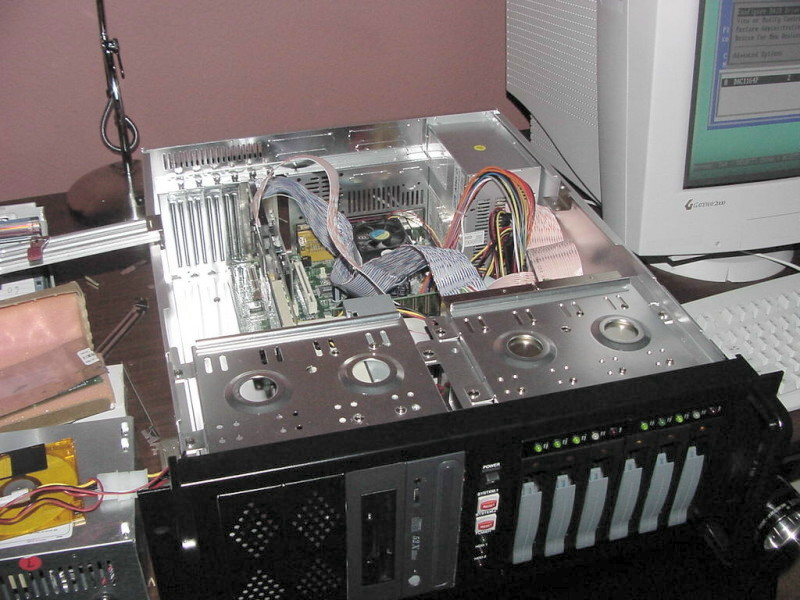
A look inside
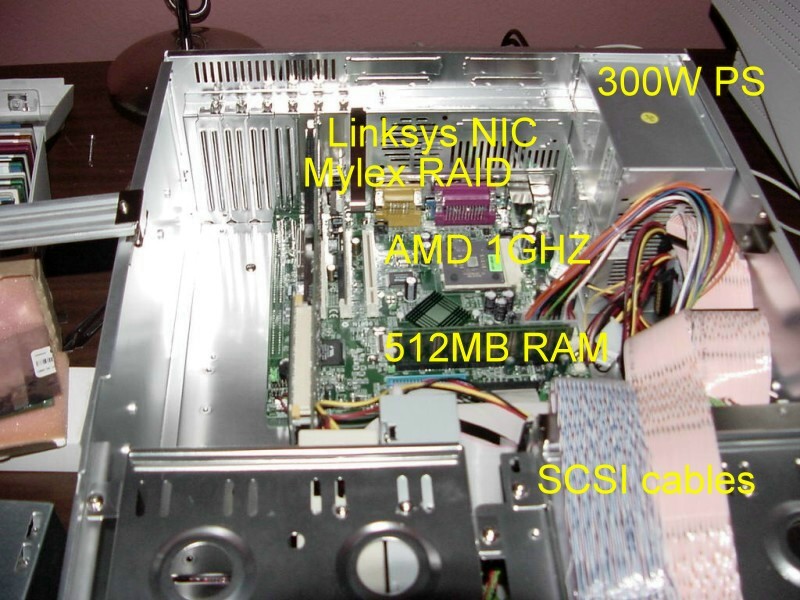
A closer look with a description
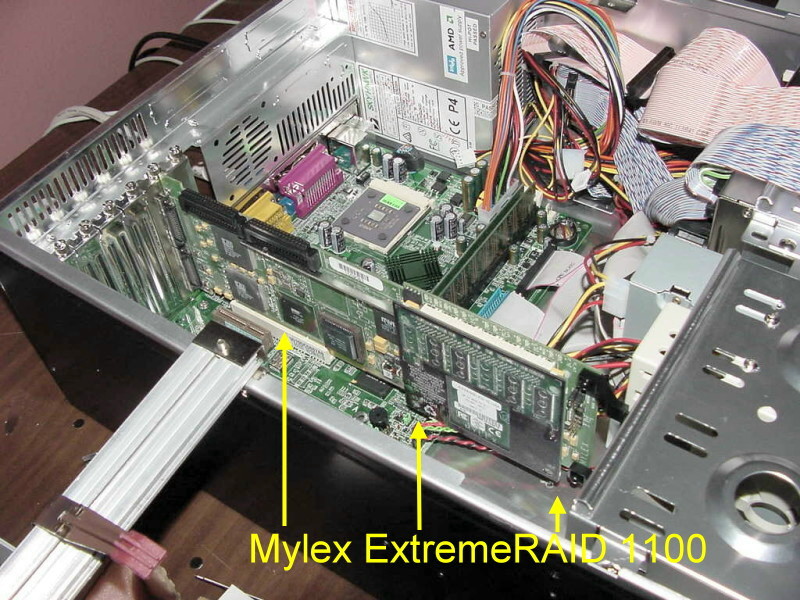
The Mylex RAID is a full length PCI card. It features a 233MHz RISC processor.
Mylex makes the best SCSI RAID cards in my opinion.
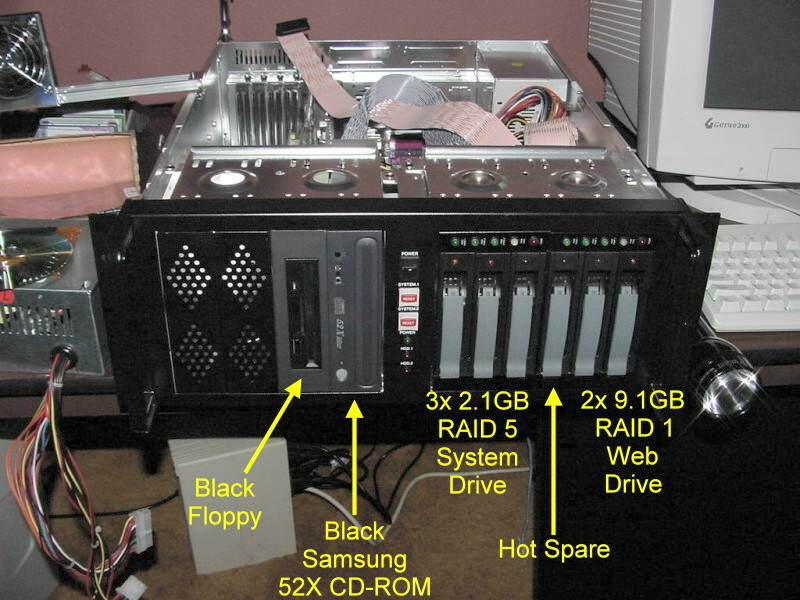
Front panel description
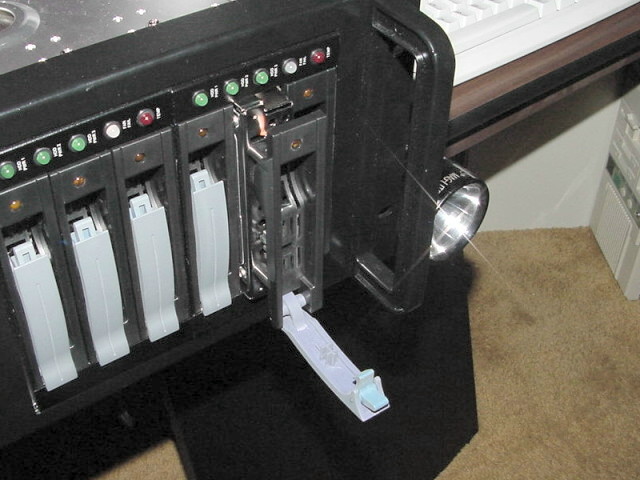
Hot-swap drive holder, drives are removed by pulling the gray lever
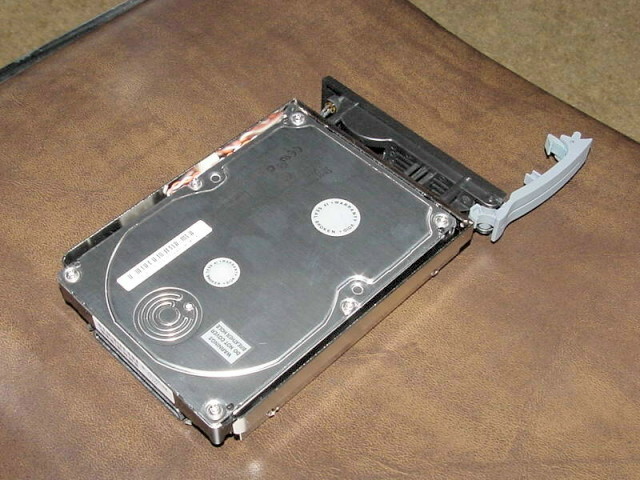
9GB Quantum in holder, drives can be replaced with the power on
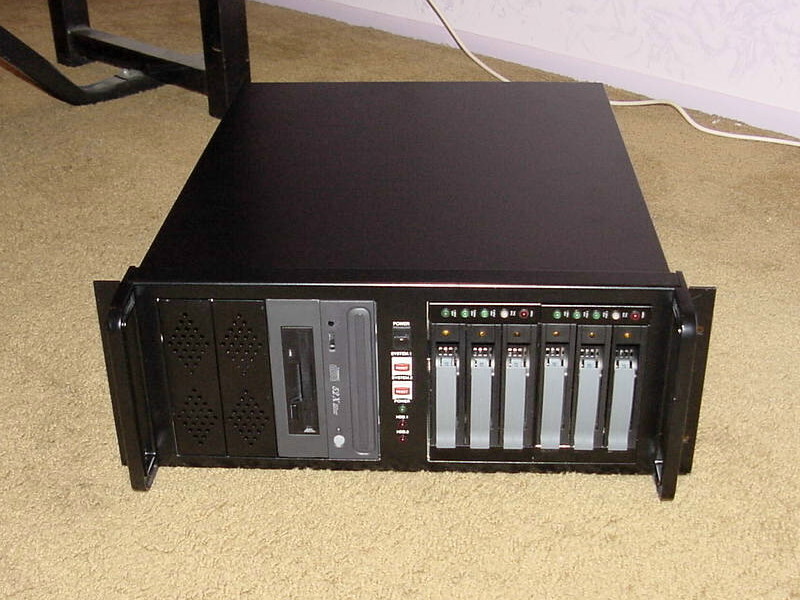
Web Server v3.0 ready for installation in the rack
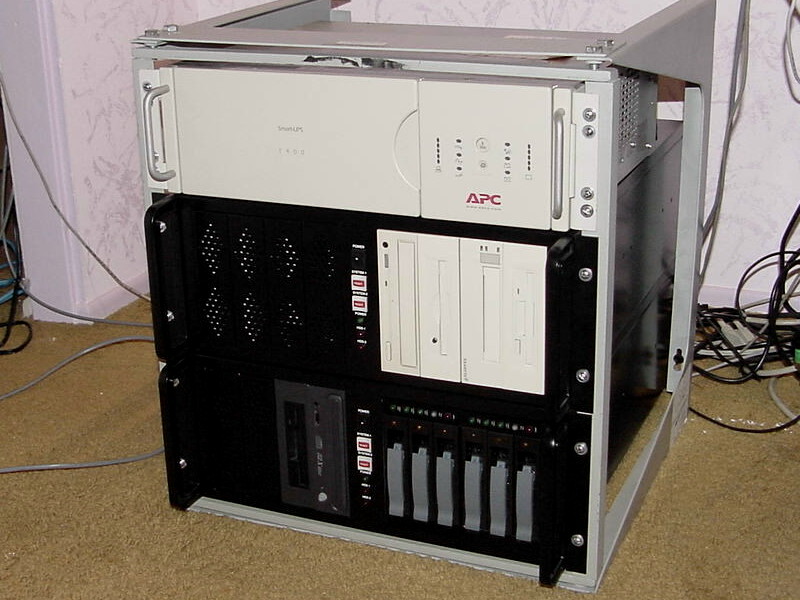
APC, FTP server, and web server
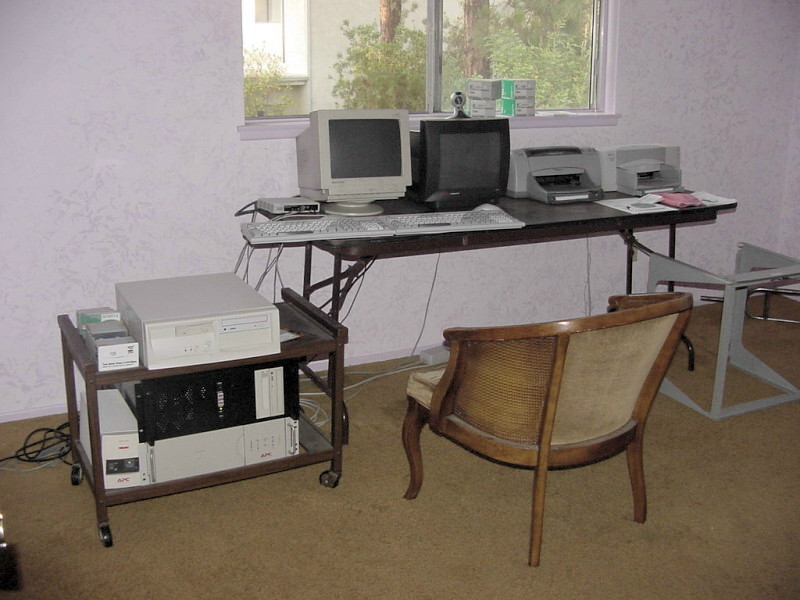
"Before" shot of my office
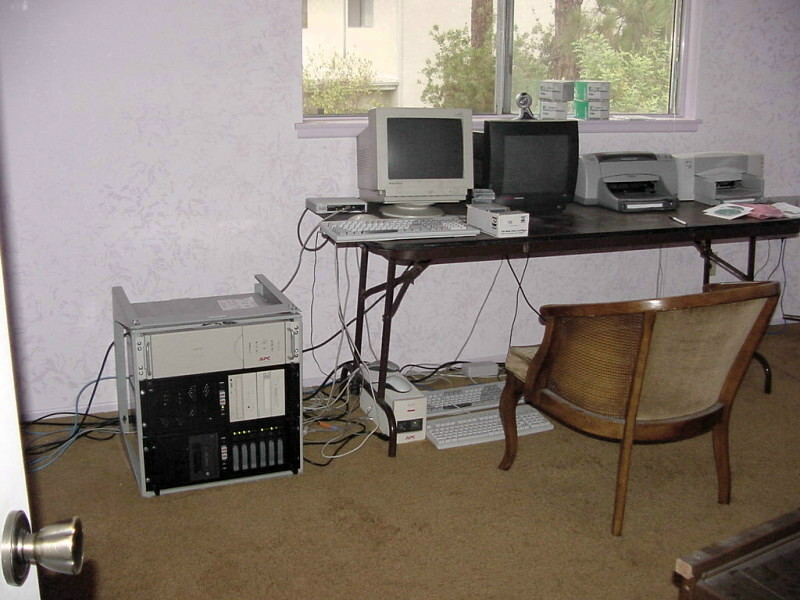
"After" shot of my office with the new web server and rack

SDSL modem for the dedicated DSL line
The new server has expandability. The MSI motherboard will support up to an AMD XP 2000+ CPU and 1GB of RAM. New drives can be added to increase capacity in minutes without even having to power down the system. The large rackmount case still has room for more drives and PCI cards.
The new server also adds redundancy. The system drive is comprised of three 2.1GB hard drives in a RAID 5 configuration that provides 4.2GB of space. If one drive should fail, the remaining two will keep the system running until a replacement drive is installed. Once installed, the data on the new drive is automatically rebuilt by the RAID card to restore the failsafe. All this is done without having to power down the system and is transparent to the outside world.
The web drive consists of two 9GB drive in a RAID 1 configuration that provides 9GB of storage space. If a drive should fail, the remaining mirrored drive would continue to serve the web pages. Again, once the failed drive is replaced the RAID card will automatically rebuild the data to restore the mirror.
In addition to the system drives and the web drives, a third Quantum 9GB drive is designated as a "hot-spare". If any drive should fail, the RAID card will grab the hot-spare drive and rebuild the data onto it until the failed drive is replaced. This way, the system doesn't run for any significant length of time unprotected. With a hot-spare on the system it would take 3 drive failures to cause data loss, rather than 2.
I feel more comfortable with version 3 handling the web pages thanks to it's RAID arrays. Now that I am able to have two (or even more) NIC's in the server all the web pages are handled by the new dedicated SDSL line. With the new CPU, the php data corruption has disappeared as I suspected it would. Don't expect another article about a new web server any time soon. The current server is doing it's job well, and I predict it will continue to do so for a long time.
Web Server v3.0 runs these sites and services:
www.divineinspireddesigns.com
www.hostingmojo.com
www.janetsceramics.com
www.wilsonbros.org
www.luvtruck.com
forums.luvtruck.com
chat.luvtruck.com
www.clanrna.com
